Remote work has shifted from niche perk to mainstream option, giving you freedom to choose assignments that fit your lifestyle and location.
This guide cuts through clutter, pinpointing the most reliable job boards, specialist marketplaces, and application tactics so you can secure a role on your terms.



Why Remote Work Appeals to So Many Professionals
Remote positions remove commuting, reduce overhead costs, and reward productivity instead of mere presence.
Employers benefit from larger worldwide talent pools, while you gain autonomy, flexibility, and the option to combine several part‑time projects into a full‑time income stream.
Remote Jobs vs Hybrid Arrangements
Hybrid schedules still require regular trips to an office, fixed hours, and face‑to‑face meetings. Fully remote roles eliminate those obligations, letting you decide whether to start at dawn, noon, or midnight, provided deadlines and targets stay on track.
That distinction matters when evaluating job boards because some platforms advertise both categories.
Essential Tools and Mind‑Set
A dependable computer, high‑speed internet, a noise‑canceling headset, and disciplined time‑management habits form the baseline.
You also need reliable asynchronous communication skills—clear emails, concise chat updates, and documented workflows—because supervisors might be ten time zones away.
General Remote Job Boards Worth Bookmarking
Each site below attracts worldwide employers and screens listings for legitimacy.
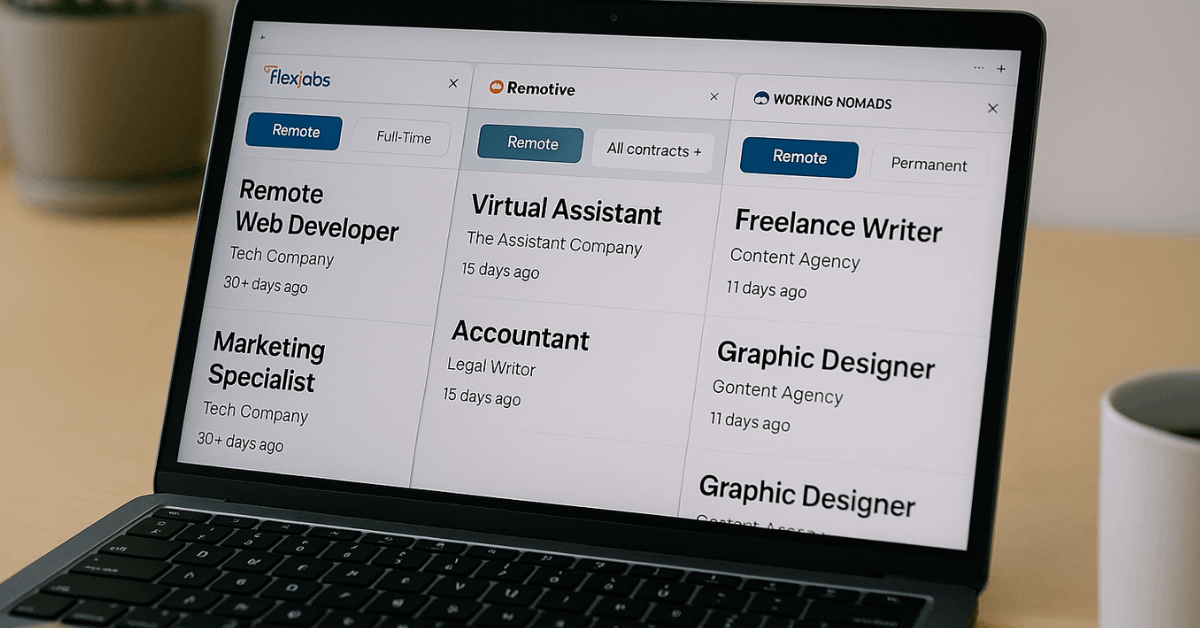
- FlexJobs – Comprehensive filters by schedule, career level, and location; subscription unlocks ad‑free browsing and expert career content.
- We Work Remotely – Minimalist interface focusing on development, marketing, and support roles.
- JustRemote – Simple search tool plus weekly email digest of curated openings.
- Remote.co – Remote‑only postings with tags for entry‑level, high‑paying, and international options.
- RemoteOK – Salary and benefits filters plus transparent location requirements.
- Remotive – Community resources, company database, and engineer salary‑share data.
- The Muse – Detailed employer profiles that highlight culture, benefits, and mission statements.
- Indeed – Massive database; set the location field to “Remote” for thousands of results.
- Jobspresso – Allows résumé uploads so hiring managers can reach out directly.
- Outsourcely – Companies hire employees and contractors worldwide without location barriers.
- JobRack – Focus on Eastern‑European talent; English fluency still valued.
- Simply Hired – Aggregates local and worldwide remote postings plus salary comparison tools.
Freelance and Contract Marketplaces
These platforms favor project‑based work and shorter commitments, ideal if you prefer variety or side income.
- Upwork – Two thousand new projects daily across writing, design, tech, and translation.
- Freelancer.com – Vast client base; proposals win gigs, so persuasive pitching pays off.
- Fiverr – Service‑listing approach lets you post predefined packages and wait for orders.
- Toptal – Rigorous vetting claims to admit the top three percent of global talent, rewarding successful applicants with premium hourly rates.
Niche Boards for Specialist Skills
Targeted platforms accelerate matching by focusing on single disciplines.
- Creativepool – Designers showcase portfolios and apply for high‑quality briefs.
- Behance – Graphic artists host work samples and receive job offers via the network.
- Dribbble – Illustrators and UI experts pick from freelance or permanent openings.
- ProBlogger – Content writers locate paid blogging or copywriting assignments quickly.
- Arc – Software engineers complete coding challenges, then field inbound offers.
- Gun.io – Developer‑first marketplace with post‑hire invoicing handled on your behalf.
Employers Consistently Hiring Remote Staff
Rather than waiting for ads, you can apply directly to organizations known for distributed teams.
- SYKES
- SAP
- Working Solutions
- BroadPath
- LiveOps
- TTEC
- Varsity Tutors
- TranscribeMe
- Williams‑Sonoma
- Dell Technologies
Research additional worldwide employers through public company career pages to widen prospects.
Common Remote Roles and Typical Earnings
Remote work covers almost every professional domain; below are frequently advertised positions plus average annual pay.
| Role | Typical Salary |
|---|---|
| Teacher | $45,468 |
| Call Center Representative | $33,948 |
| Administrative Assistant | $40,052 |
| Recruiter | $54,075 |
| Accountant | $59,606 |
| Tutor | $39,217 |
| Engineer | $79,724 |
| Writer | $57,379 |
| Customer Service Representative | $38,964 |
| Sales Representative | $69,403 |
Figures reflect United States medians; adjust expectations for other regions.

Six‑Step Roadmap to Landing a Remote Position
A structured approach shortens the search and increases interview invitations.
Research Industries Offering Location‑Independence
Target fields that already run most daily tasks online.
Information technology, digital marketing, accounting, customer support, and e‑learning need nothing more than reliable software and steady bandwidth, so employers in these sectors rarely insist on office presence.
Scan job ads and note recurring tools, time‑zone requirements, and pay ranges; trends reveal which specialties reward remote talent most consistently.
Focus on Remote‑Centric Boards
Generic job sites mix on‑site, hybrid, and off‑site roles, forcing endless filter tweaking. Remote‑first boards skip that clutter by tagging every listing for location flexibility, schedule expectations, and sometimes even contractor status.
Frequent visits keep you ahead of fresh postings, and saved‑search alerts ensure you never miss a role that matches key skills or preferred time zones.
Tailor Your Résumé for Independence
Hiring managers skim hundreds of applications, so highlight traits proving you work effectively without in‑person oversight.
Mention asynchronous collaboration tools such as Slack, Asana, or GitHub, quantify results achieved under minimal supervision, and note prior experience across distributed teams.
A clear skills section plus bullet points that follow the “achieved X using Y, resulting in Z” format shows immediate value.
Clarify Employment Type Preferences
Remote openings span full‑time payroll positions, fixed‑term contracts, and project‑based freelance gigs.
Each path carries distinct tax rules, benefits, and stability levels. Decide early which mix fits your income goals and lifestyle, then filter searches accordingly.
Stating your preference in cover letters signals focus and prevents drawn‑out negotiations over incompatible arrangements.
Prepare for Video‑Based Interviews
Professional lighting, a quiet room, and a neutral backdrop help recruiters focus on answers instead of distractions.
Test the camera, microphone, and internet speed a day in advance, then keep concise talking points near the screen to stay on message.
Dress to match company culture, maintain eye contact through the lens, and follow up quickly with a crisp thank‑you email that reinforces your main qualifications.
Weigh Benefits Against Potential Challenges
Remote roles offer flexibility, reduced commuting costs, and broader worldwide opportunities, yet they can also bring isolation, blurred work‑life boundaries, and coordination issues across time zones.
Mitigate drawbacks by setting firm office hours, scheduling regular check‑ins with colleagues, and establishing a dedicated workspace. Thoughtful routines guard productivity while preserving the freedom that makes remote work appealing.
Seven Application Techniques That Impress Hiring Managers
A competitive global talent pool means every detail matters.
- Craft a remote‑optimized résumé using the XYZ formula: accomplished X by doing Y, resulting in Z.
- Choose an ATS‑friendly template to avoid automatic rejections.
- Practice responses to situational questions unique to distributed teams—for example, handling miscommunication across time zones.
- Mirror keywords in each job description so algorithmic filters flag your profile.
- Verify geographic eligibility; some employers limit recruitment to overlapping business hours.
- Demonstrate concise, professional cover letter and correspondence writing to showcase communication strength.
- Present evidence of self‑starting behavior, such as personal projects or volunteer code contributions.
Conclusion
Remote employment opens worldwide opportunities across countless industries, yet success hinges on disciplined preparation.
Selecting the right platforms, optimizing application materials, and providing autonomy will position you ahead of equally qualified competitors. Follow the abovementioned strategies, and the next role can arrive sooner than expected.