A no-annual-fee card sounds like a safe, boring choice. And maybe that reputation is exactly why the Amex Blue Cash Everyday Card keeps getting overlooked by the people who would benefit from it the most.
Grocery shoppers are the card’s ideal audience. Not travelers, not cashback hackers, not people with spreadsheets tracking rotating quarterly categories. Regular people buying food every week.



This article is for that person. The one who spends $200 to $600 a month at the supermarket and wants to stop leaving money on the table without committing to an annual fee.
No Annual Fee Cards Are Not All Equal, and the Amex Blue Cash Proves It
The no-annual-fee category is crowded. Flat-rate cards like the Citi Double Cash and Chase Freedom Unlimited dominate the conversation because they are easy to explain. One rate. Every purchase. Done.
I think that simplicity is slightly overrated for households with predictable spending.
If your grocery bill is your biggest monthly expense, a card that pays you more specifically at supermarkets will almost always beat a card that pays you the same rate everywhere.
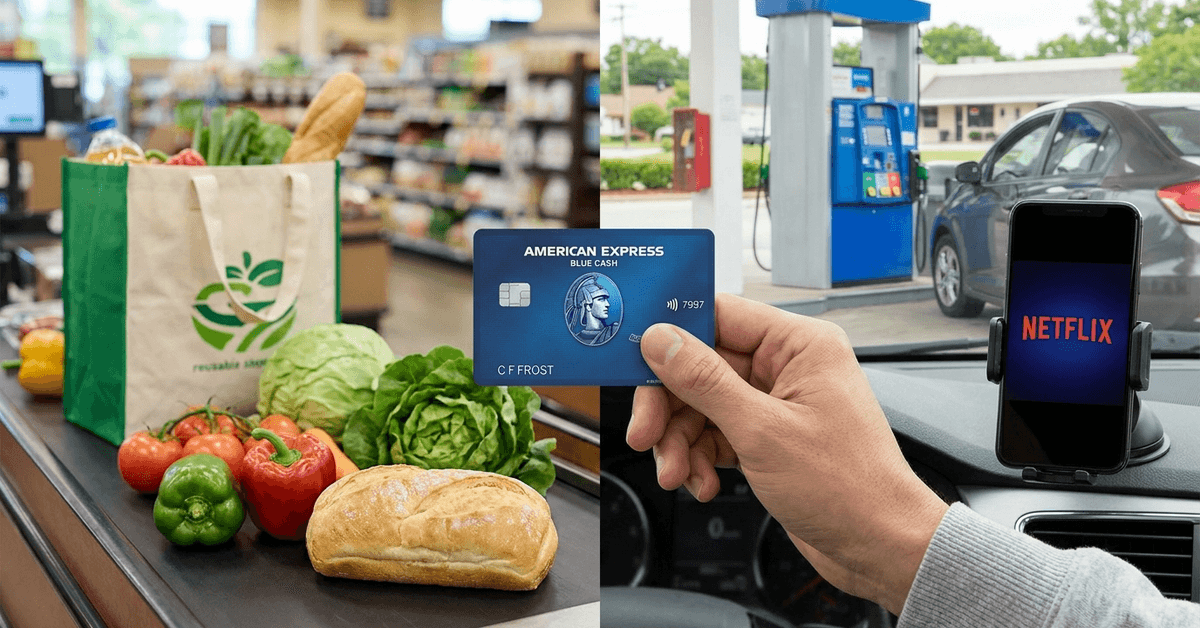
The Amex Blue Cash Everyday Card earns 3% cash back at U.S. supermarkets on up to $6,000 in annual spending, then drops to 1% after that cap.
Gas stations and select online streaming subscriptions each earn 3% cash back as well, also subject to the $6,000 annual cap per category.
How the Supermarket Bonus Actually Works
The cap sounds scary on paper. Six thousand dollars per year at supermarkets works out to $500 per month. Many households spend less than that on groceries, which means the cap never becomes a real problem for them.
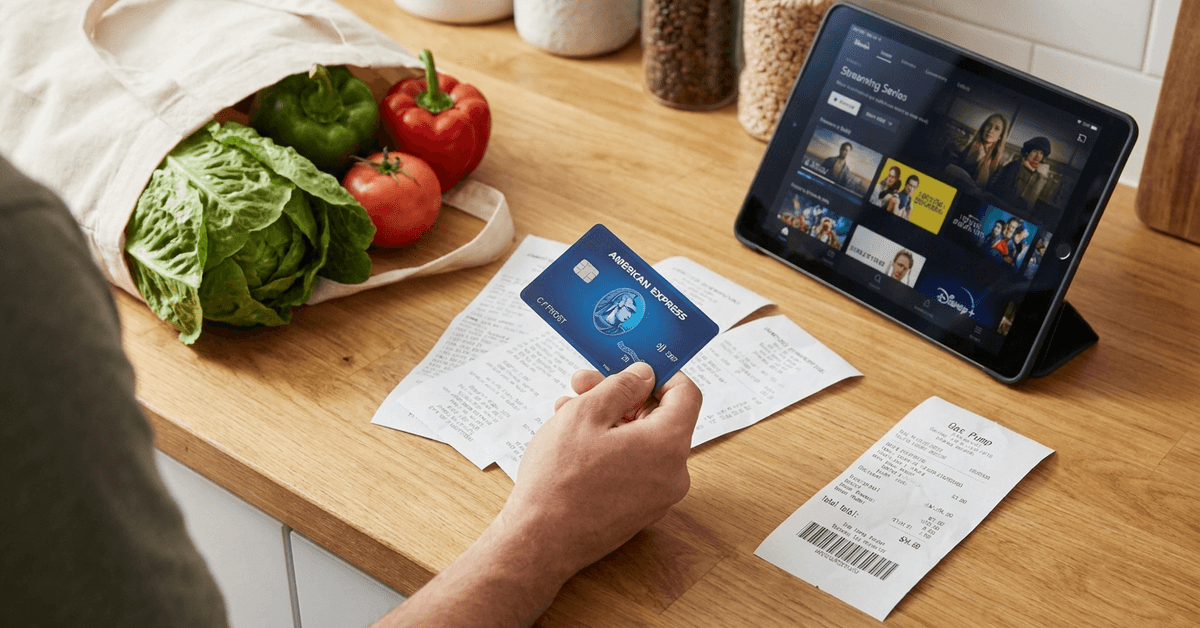
For a family spending $400 a month at supermarkets, the 3% rate generates $144 per year in cash back from that category alone.
A flat-rate card paying 2% on the same $4,800 generates $96. That is a $48 annual difference from one spending category, on a card with no annual fee.
Why the Streaming Bonus Gets Ignored (And Probably Shouldn’t)
A lot of card reviewers skip past the streaming bonus because it feels minor. I was skeptical of that framing until I did the math for a household subscribed to three or four platforms at roughly $15 to $20 each per month.
That is $60 to $80 in monthly streaming costs, or up to $960 per year. At 3% back, that is around $28 in cash back annually from streaming alone. It adds up without any behavior change required.
The Flat-Rate Card Argument, and Where I Actually Disagree
I genuinely disagree with the widespread advice that flat-rate cards are automatically better for “most people.” That framing treats average behavior as universal, and it is not.
Flat-rate cards win when your spending is scattered across dozens of unrelated categories with no dominant pattern. But that is not how most grocery-heavy households actually spend.
Their top three expense categories are often groceries, gas, and subscriptions. Those happen to be exactly the three categories where the Amex Blue Cash pays 3%.
The argument for flat-rate simplicity is strongest for people who carry multiple cards and want one catch-all. For someone using a single card for everything, including groceries, the Amex Blue Cash Everyday is worth a harder look than it usually gets.
Comparing the Amex Blue Cash Everyday Against Its Closest Competitors
| Card | Grocery Rate | Gas Rate | Annual Fee | Streaming Bonus |
|---|---|---|---|---|
| Amex Blue Cash Everyday | 3% (up to $6,000/yr) | 3% (up to $6,000/yr) | $0 | 3% on select services |
| Citi Double Cash | 2% (flat) | 2% (flat) | $0 | None |
| Chase Freedom Unlimited | 1.5% (flat) | 3% at gas (up to $6,000/yr) | $0 | None |
The takeaway: for grocery-heavy budgets, the Amex Blue Cash Everyday card leads the three.
Chase Freedom Unlimited matches on gas but trails everywhere else. Citi Double Cash is the stronger pick only when spending is genuinely spread across many categories without a grocery concentration.
The Drawbacks That Reviews Tend to Understate
Foreign Transaction Fees Are a Real Cost for Online Shoppers
The Amex Blue Cash Everyday charges a 2.7% foreign transaction fee. This matters not just for international travel, but also for anyone who regularly purchases from international online retailers.
A $200 order from an overseas merchant costs an extra $5.40 in fees. That is not catastrophic, but it chips away at rewards earned elsewhere.
American Express Acceptance Is Still Uneven in 2026
Visa and Mastercard acceptance rates remain higher than Amex at smaller retailers and independent restaurants in the U.S. This is less of a problem than it was five years ago, but it has not disappeared.
If your grocery store of choice is a small independent market that does not take Amex, the whole value proposition collapses for that spending category.
The $6,000 Annual Cap Hits Some Households Hard
For a large family spending $700 or more per month on groceries, the $6,000 cap gets hit by August or September.
Everything beyond that earns 1%. That is where pairing this card with a flat-rate card makes sense: use the Amex Blue Cash Everyday through the cap, then switch to a 2% flat-rate card for the rest of the year.
One Thing No Other Review Seems to Mention
Cash back from personal credit card purchases is generally not taxable income. The IRS treats it as a rebate on spending, not earned income.
That means the $144 grocery cash back example above is actually worth $144, with no tax adjustment needed for the average consumer.
This changes the math slightly when comparing cash back to points-based travel cards.
Travel points do have redemption value, but that value is rarely guaranteed and depends on availability and card-specific transfer rules. Cash back is just cash back. A dollar in statement credits is a dollar.
I think this clarity is undervalued when people debate cash back versus points cards, and the Amex Blue Cash Everyday Card is one of the cleaner examples of what straightforward cash back looks like at the no-annual-fee level.
Small Habits That Make the Rewards Add Up Faster
Getting more from this card does not require obsessive tracking. A few adjustments make a real difference:
- Run your streaming subscriptions through the card. Set each one to auto-pay with the Amex Blue Cash Everyday and forget about it. The 3% rate applies automatically.
- Fill up at U.S. gas stations using this card. The 3% rate at gas stations applies on up to $6,000 per year, which covers roughly $115 per week in fuel costs before you hit the cap.
- Track your supermarket spending through the Amex app. The app shows category breakdowns, so you can see how close you are to the $6,000 cap without building a separate spreadsheet.
- Pay the balance in full monthly. Cash back cards only work in your favor when no interest is accruing. Carrying a balance at 19% to 29% APR wipes out any rewards earned.
Cash back from a no-annual-fee card is only a good deal when you are not paying interest. That sounds obvious, but card issuers are counting on a percentage of users to carry balances. For a card like the Citi Double Cash, the same principle applies.
Questions People Ask About the Amex Blue Cash Everyday Card
Q: Does the Amex Blue Cash Everyday card have a sign-up bonus? Amex periodically offers introductory bonuses, but these offers change frequently and are not always available. The card’s core value comes from ongoing cash back rates rather than a one-time welcome offer, so check the current offer at the time of application.
Q: Do warehouse stores like Costco or Sam’s Club count as supermarkets for the 3% rate? No. Amex excludes superstores, warehouse clubs, and discount stores from the supermarket category. If your primary grocery shopping happens at Costco or Walmart, the elevated grocery rate will not apply to most of those purchases.
Q: Can I redeem cash back as a direct deposit or check? Cash back is redeemable as a statement credit, which reduces your balance rather than depositing cash directly into a bank account. For most users, this works fine since it effectively reduces monthly spending.
Q: Is there a credit score minimum to get approved for the Amex Blue Cash Everyday? Amex does not publish a specific minimum, but the card generally targets applicants with good to excellent credit. A FICO score of 670 or above gives you a reasonable approval chance, though other factors in your credit profile also affect the decision.
Q: What happens to cash back rewards if I close the account? Unredeemed cash back rewards are typically forfeited when you close an Amex account. Redeem your rewards as a statement credit before closing if you decide to switch cards.
Conclusion
The Amex Blue Cash Everyday card earns its place in a wallet when groceries are your biggest monthly expense.
A family spending $400 a month at supermarkets collects around $144 in cash back per year from that category alone. That kind of consistent, predictable return on everyday spending does not need a flashy sign-up bonus to justify itself.
The card’s limits are real, especially for large families who shop at warehouse stores, but for the right household, the math works in your favor every single month.